In most mid-sized and enterprise organizations, accounts payable sits at the intersection of operational purchasing, vendor management, and financial control. When invoice volumes increase and approval chains become more distributed, manual processing quickly turns into a bottleneck. AP automation ERP integration is not simply about digitizing invoices; it is about embedding payable workflows directly into the financial system of record.
From an architectural standpoint, this integration connects document ingestion, validation engines, approval workflows, and payment execution with the ERP’s general ledger, vendor master data, and procurement modules. The real challenge is not technical connectivity alone, but maintaining transactional integrity, auditability, and predictable financial reporting across systems.
The role of ERP as system of record in AP automation ERP integration
In most financial architectures, the ERP functions as the single source of truth for accounting and transactional integrity. Even when automation layers are introduced, the ERP remains the authoritative environment where financial data is validated, structured, and formally recorded. Any ap automation and erp integration must therefore align with the ERP’s data ownership model rather than attempting to override it.
An ERP platform typically governs the following critical data domains:
- vendor master records;
- chart of accounts structure;
- purchase order documentation;
- payment terms and conditions;
- official accounting postings and journal entries.
In most integration scenarios, the ERP is not replaced but extended. The automation solution manages invoice ingestion, OCR processing, validation rules, and approval routing, while final posting and payment execution remain within the ERP environment. A common integration challenge is managing timing discrepancies between automation workflows and ERP posting schedules. Without carefully designed synchronization logic, organizations may encounter duplicate entries, posting conflicts, or reconciliation inconsistencies.
Data flow models and integration patterns
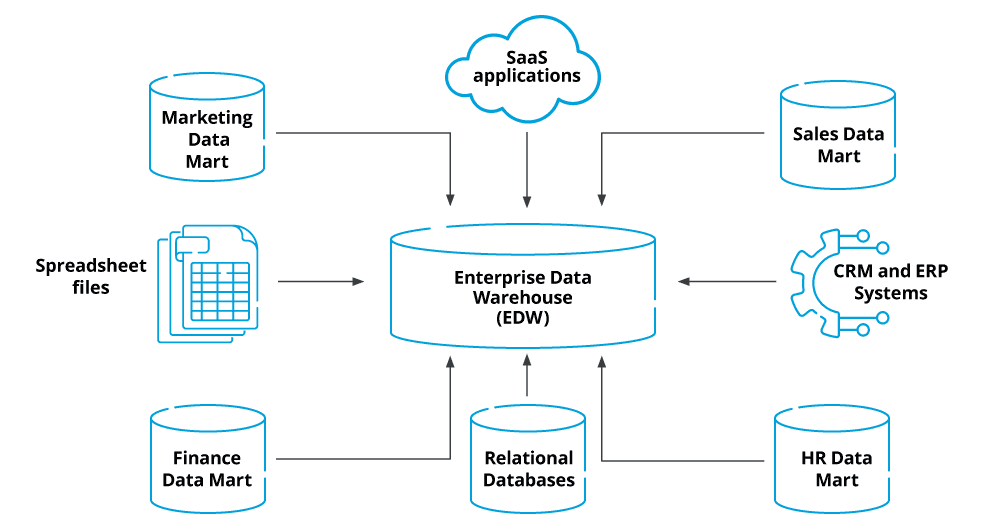
Architectural decisions in erp ap automation integration usually fall into three main patterns. Each has implications for control, latency, and maintainability.
Before selecting a model, it is useful to compare their structural differences.
| Integration Model | Data Direction | Control Location | Typical Use Case | Key Trade-Off |
| ERP-Centric | Automation → ERP (posting only) | ERP | Conservative finance teams | Limited workflow flexibility |
| Bi-Directional Sync | Automation ↔ ERP | Shared | Complex approval logic | Higher orchestration complexity |
| Hub-Based Middleware | Automation ↔ Integration Hub ↔ ERP | Integration layer | Multi-system finance landscape | Additional infrastructure layer |
This comparison helps technical stakeholders evaluate operational risk and long-term scalability rather than focusing solely on initial deployment effort.
In most large-scale deployments, hub-based architectures provide more resilience, but they require careful orchestration and version control.
Invoice capture and validation logic inside end-to-end AP automation ERP integration providers
When evaluating end-to-end ap automation erp integration providers, it is important to separate marketing positioning from architectural reality. Capture accuracy alone does not define integration maturity.
Core functional components usually include:
- OCR and structured data extraction.
- PO-based and non-PO matching rules.
- Tolerance threshold configuration.
- Exception routing.
- Audit trail logging.
The integration layer must map validated invoice data into ERP-specific posting schemas.
This mapping often depends on:
- Vendor account structures.
- Cost center hierarchies.
- Tax configuration rules.
- Multi-entity accounting setups.
In multi-subsidiary environments, these mappings become significantly more complex and require governance controls to avoid configuration drift.
API-based versus file-based integration approaches
Despite the availability of REST APIs in modern ERP platforms, not every ap automation software erp integration usa project uses real-time APIs.
In some cases, legacy ERP environments still rely on:
- flat file imports;
- SFTP batch uploads;
- scheduled reconciliation jobs.
Each method introduces different risk profiles.
API-based integration offers:
- near real-time synchronization;
- granular error handling;
- better traceability.
However, it also increases dependency on ERP uptime and API rate limits.
Batch-based integration is:
- operationally stable;
- less sensitive to temporary outages;
- easier to audit historically.
But it may delay financial visibility and complicate exception management.
Workflow orchestration and approval hierarchy complexity
In theory, AP automation simplifies approvals. In practice, approval logic often mirrors organizational complexity.
A typical automated workflow may include:
- Invoice submission.
- Automated validation and PO match.
- Departmental approval.
- Finance review.
- ERP posting.
- Payment scheduling.
The difficulty arises when approval hierarchies differ by entity, amount threshold, or cost center. In such cases, integration logic must dynamically evaluate routing rules based on ERP master data.
A common implementation mistake is hardcoding approval logic in the automation tool without referencing ERP metadata. This leads to governance misalignment when organizational structures change.
Master data synchronization and integrity risks
Integration stability depends heavily on clean and synchronized master data. Vendor changes, bank account updates, or cost center modifications must propagate consistently.
Typical risk factors include:
- asynchronous vendor creation;
- mismatched tax configurations;
- duplicate vendor IDs;
- inconsistent currency settings.
In most integration scenarios, a unidirectional master data flow from ERP to the automation platform reduces reconciliation risk. However, this approach may slow vendor onboarding if finance teams depend on automation interfaces.
Security, compliance, and audit traceability
Financial systems operate under strict compliance requirements.
Any ap automation erp integration best practices must address:
- role-based access control alignment;
- segregation of duties enforcement;
- encryption of invoice and payment data;
- detailed audit logging.
Integration architectures should preserve immutable transaction records. When invoices move between systems, audit identifiers must remain traceable across platforms.
A frequent oversight is failing to align ERP user roles with automation platform permissions. This can create approval authority inconsistencies that are difficult to detect during audits.
Scalability considerations and performance constraints
As invoice volumes grow, integration throughput becomes critical.
Performance limitations typically surface in:
- API rate limits;
- database write locks;
- approval queue congestion;
- background job scheduling conflicts.
The best erp integrations for ap automation are not defined solely by feature lists but by how well they scale under load.
System architects must evaluate:
- expected invoice growth rates;
- peak submission periods;
- multi-entity posting concurrency;
- ERP posting window constraints.
Horizontal scalability in the automation layer does not always translate into ERP scalability. The ERP remains the financial bottleneck in many architectures.
Implementation governance and phased rollout strategy
Large-scale ap automation and erp integration projects rarely succeed with a “big bang” deployment. A phased rollout reduces operational risk.
A typical implementation roadmap includes:
- Pilot entity or department.
- Limited vendor group onboarding.
- Controlled parallel run.
- Gradual workflow expansion.
- Full ERP posting automation.
Each phase allows validation of posting accuracy, approval routing, and reconciliation consistency.
Governance structures should include:
- integration change management procedures;
- version control for API contracts;
- regression testing after ERP upgrades;
- monitoring dashboards for transaction failures.
Without formal governance, small configuration changes can accumulate and destabilize financial reporting.
Conclusion: designing stable and maintainable AP automation ERP integration
AP automation ERP integration is fundamentally an architectural exercise in financial control extension. It connects document workflows with accounting logic while preserving the ERP as system of record.
In most integration scenarios, long-term success depends less on automation features and more on predictable data synchronization, master data governance, and disciplined orchestration. Trade-offs between real-time APIs and batch processing, centralized versus hub-based models, and workflow flexibility versus control must be evaluated in the context of system complexity.
A stable integration architecture prioritizes traceability, scalability, and maintainability. When designed with clear data ownership, controlled synchronization, and robust audit alignment, the result is not merely faster invoice processing but a resilient financial infrastructure capable of supporting organizational growth without compromising system integrity.