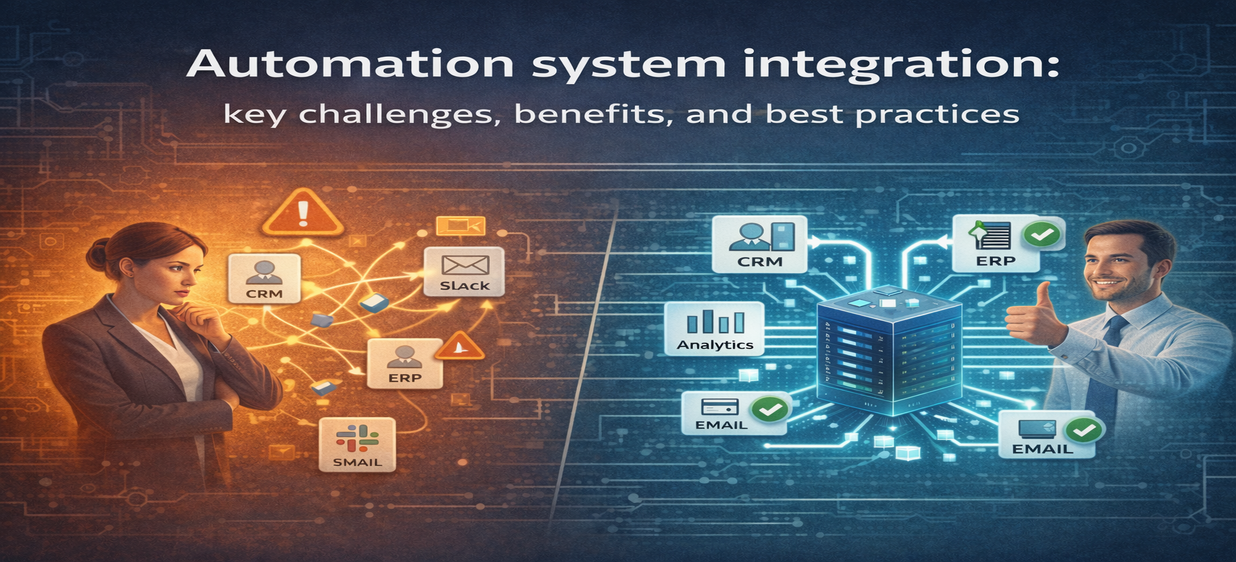
Modern organizations rarely operate a single platform. CRM, marketing automation, billing, product analytics, internal tools, and data warehouses all coexist within the same digital environment. Automation system integration becomes the connective tissue that allows these systems to exchange data predictably and act on shared context. In practice, this is less about “connecting tools” and more about designing a stable architecture that can evolve without introducing systemic fragility.
In most integration scenarios, the technical complexity lies not in the APIs themselves, but in orchestration, data consistency, and operational reliability. Automation systems integration requires architectural clarity, careful error handling, and an understanding of how independent platforms behave under load and change.
The architectural role of automation system integration in modern stacks
Automation rarely lives in isolation. It sits between core business systems and coordinates actions based on state changes. When designed correctly, it becomes a deterministic execution layer; when designed poorly, it turns into a cascade of unpredictable side effects.
In typical SaaS environments, automation system integration connects:
- CRM platforms.
- Email and marketing automation tools.
- Billing systems.
- Product usage tracking.
- Internal support systems.
- Data warehouses.
Each connection introduces assumptions about timing, data structure, and error handling. A common integration challenge is underestimating how frequently schemas change or how often business logic evolves. Stable architecture requires abstraction layers and clear ownership of data domains.
Data consistency and synchronization boundaries
At the heart of system integration automation is the question of data authority. Which system is the source of truth? Which system can override values? Without explicit synchronization rules, automation logic eventually contradicts itself.
In most integration scenarios, synchronization models fall into one of three categories:
- One-way push (system A → system B).
- Bidirectional sync with conflict resolution.
- Event-driven updates with derived state.
Each approach has trade-offs. Bidirectional sync may appear flexible but often introduces race conditions. Event-driven patterns improve scalability, yet require disciplined event modeling and idempotency guarantees.
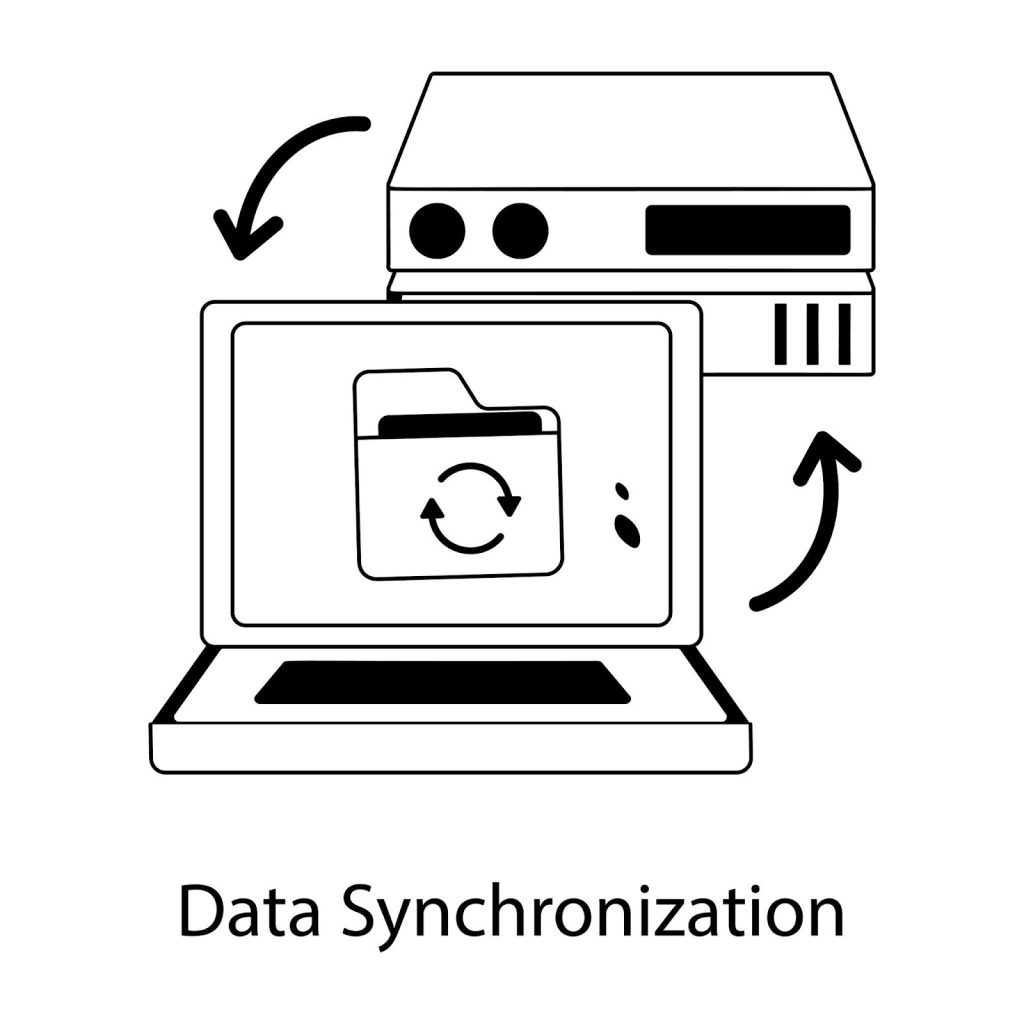
In complex ecosystems, it is usually safer to minimize bidirectional flows and define a single authoritative system per domain.
Integrating email automation with CRM systems: operational realities
Integrating email automation with CRM systems is one of the most common integration patterns. At first glance, it seems straightforward: sync contacts, track engagement, update lifecycle stages. In practice, edge cases dominate the implementation effort.
Typical challenges include:
- Duplicate contact creation due to inconsistent identifiers.
- Delayed webhook processing.
- CRM validation rules rejecting automation updates.
- Inconsistent lifecycle mapping across systems.
The workflow often follows a structured process:
- Define identity resolution logic (email, external ID, composite keys).
- Map CRM object fields to automation platform attributes.
- Establish trigger conditions and rate limits.
- Implement retry logic and dead-letter handling.
- Monitor for drift between systems.
Failure to formalize these steps results in silent data divergence. Over time, marketing automation reflects outdated CRM states, and business decisions rely on inconsistent datasets.
Orchestration models and middleware selection
Automation systems integration can be implemented directly between platforms or through a middleware layer. The choice depends on system complexity, team maturity, and long-term scalability goals.
Before selecting an approach, it helps to compare structural characteristics.
| Approach | Advantages | Limitations | Suitable Scenarios |
| Point-to-point integrations | Lower initial complexity | Hard to scale, fragile dependency graph | Small system count, stable requirements |
| iPaaS / middleware orchestration | Centralized logic, reusable workflows | Additional abstraction layer | Growing SaaS stack with evolving processes |
| Event-driven architecture | High scalability, decoupled systems | Requires disciplined event modeling | Complex product ecosystems |
| Custom integration layer (microservices) | Full control, domain isolation | Higher engineering cost | Large-scale or regulated environments |
This comparison is useful because integration debt accumulates silently. In most integration scenarios, point-to-point models become brittle beyond a certain scale. Middleware adds structure but introduces its own operational overhead.
Error handling and observability in automation systems integration
Automation failures rarely appear immediately. They surface as missing CRM updates, delayed billing actions, or unsent lifecycle emails. Without observability, troubleshooting becomes reactive.
Reliable integration design typically includes:
- Structured logging.
- Centralized monitoring.
- Retry queues.
- Idempotent processing.
- Alerting thresholds.
A common integration challenge is treating error handling as an afterthought. However, in distributed SaaS environments, network failures and API throttling are normal conditions. System integration automation must assume partial failure as a baseline reality.
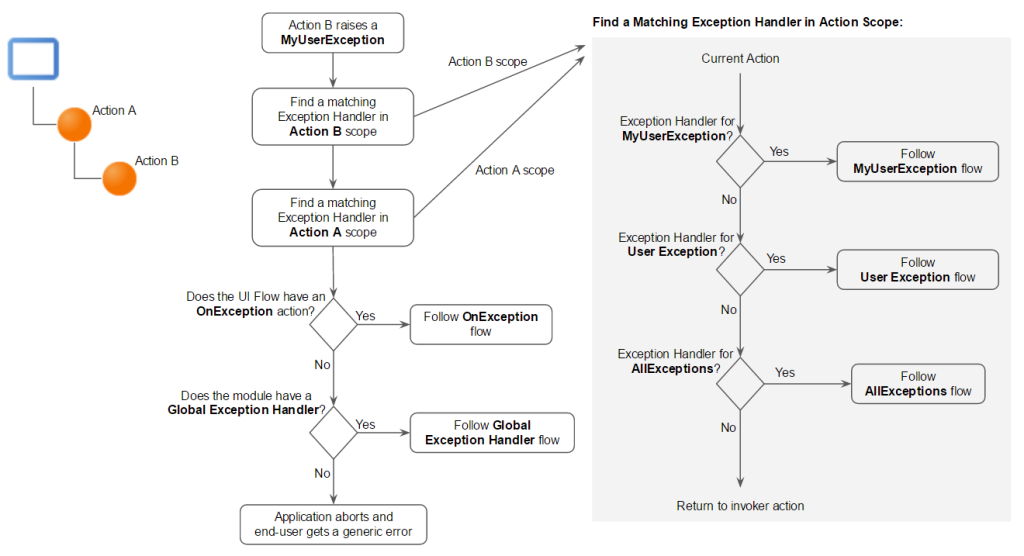
Observability is not a feature layer; it is part of the architecture itself.
Security, access control, and compliance boundaries
Automation often requires broad API access. Tokens with excessive permissions increase risk exposure, especially when workflows span customer data, billing records, and communication history.
In most integration scenarios, security best practices include:
- Scoped API credentials.
- Token rotation policies.
- Encrypted secret storage.
- Role-based access controls.
- Audit trails for automation changes.
Architectural trade-offs arise when speed conflicts with governance. Quick implementations often bypass fine-grained permissions, but long-term maintainability depends on clear security boundaries.
Managing versioning and API evolution
SaaS APIs change. Fields are deprecated, rate limits are adjusted, and authentication mechanisms evolve. Automation system integration must account for this volatility.
Versioning strategies typically include:
- API version pinning.
- Schema validation layers.
- Backward-compatible data mapping.
- Staging environment testing.
Without these safeguards, a minor vendor update can break downstream automation chains. Dependencies must be visible and documented, not implicit within workflow builders.
Scaling automation under operational load
As business volume grows, automation frequency increases. What worked for hundreds of daily events may not sustain thousands per minute. Scalability depends on queueing, concurrency control, and rate limit awareness.
In most integration scenarios, scaling decisions revolve around:
- Synchronous vs asynchronous processing.
- Horizontal worker scaling.
- Event batching.
- Back-pressure handling.
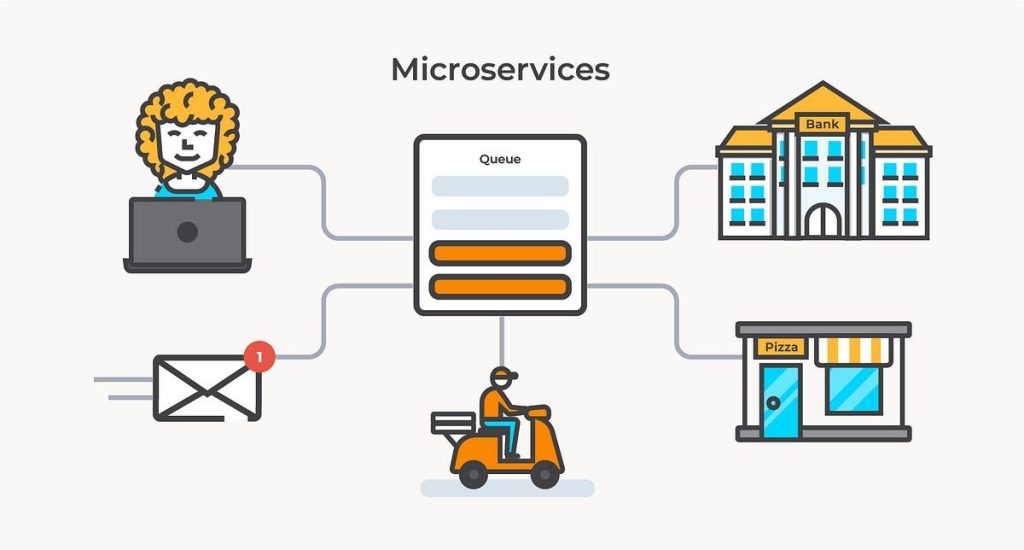
Architectural missteps become visible only under load. Designing for predictable growth requires conservative assumptions about peak usage and API constraints.
Common implementation mistakes in automation systems integration
Across projects, certain patterns repeat. These are rarely conceptual misunderstandings; they are execution shortcuts.
Frequent mistakes include:
- Embedding business logic directly in third-party automation tools.
- Ignoring idempotency.
- Allowing circular data flows.
- Overloading CRM with derived states.
- Failing to document integration ownership.
Automation systems integration is not a one-time project. It becomes an operational layer requiring governance and architectural stewardship.
Best practices for long-term maintainability
Sustainable integration design emphasizes clarity over convenience. In most integration scenarios, maintainability depends on reducing implicit dependencies and formalizing workflows.
Effective practices include:
- Defining a system-of-record per data domain.
- Centralizing transformation logic.
- Maintaining integration documentation and diagrams.
- Implementing proactive monitoring.
- Reviewing workflows during system changes.
These practices reduce fragility and improve predictability. The objective is not maximum automation, but controlled automation.
Conclusion: predictable architecture over rapid connectivity
Automation system integration is less about connecting tools and more about designing a coherent execution layer across distributed systems. Benefits such as operational efficiency and reduced manual effort depend entirely on architectural discipline.
In most integration scenarios, long-term stability emerges from explicit data ownership, observable workflows, and conservative scaling assumptions. Automation systems integration should evolve alongside business processes, not ahead of them. A predictable integration architecture supports scalability and maintainability without compromising system integrity.
When implemented with careful orchestration and clear boundaries, automation system integration becomes a structural advantage rather than a hidden operational risk.